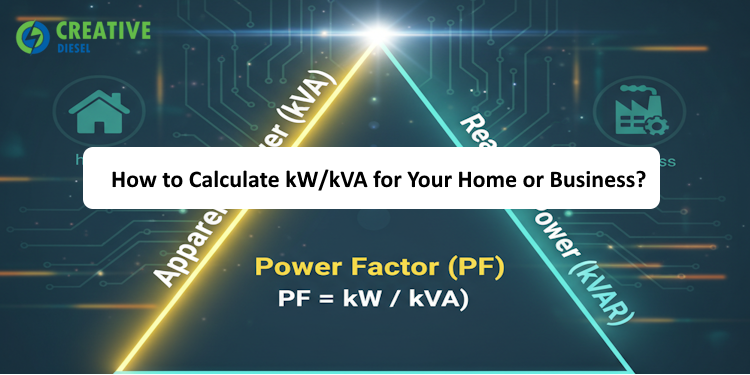
How to Calculate kW/kVA for Your Home or Business?
Understanding the difference between kW and kVA helps you make smarter decisions about your energy use and equipment needs. Here’s a quick guide to get you started and a formula you can use right now to estimate your requirements.
What is the Difference Between kW and kVA?
- kW (kilowatt): The actual usable power for your devices—this is what you pay for on your energy bill.
- kVA (kilovolt-ampere): The apparent or total power supplied, including both usable power and what’s lost due to inefficiencies in the system.
- Power Factor (PF): A number (between 0 and 1) that tells you how efficiently your appliances use electricity; in most homes and offices, it usually sits around 0.8.
The Formula: How to Calculate kW from kVA (and Vice Versa)
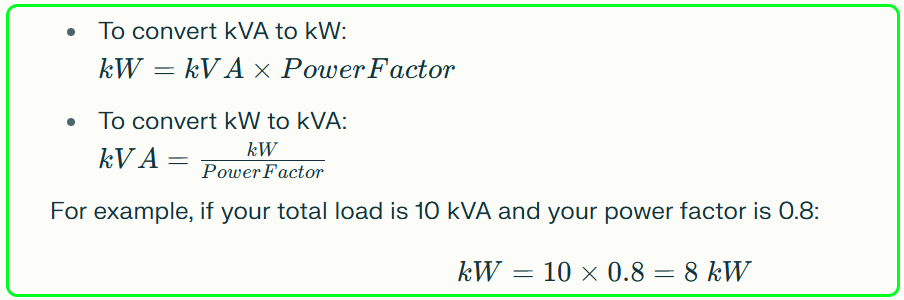
This means your equipment would actually use 8 kW of real power.
Step-by-Step Guide for Home or Business
- List All Appliances: Write down every device’s wattage (usually found on the label or manual).
- Add Up Total Wattage: Sum the wattage of all essential appliances.
- Convert to kVA:First, divide the total watts by 1,000 to get kW.
- Next, divide kW by the typical power factor (0.8 if not specified)
- Convert kVA to kW (if needed):kW=kVA×PowerFactor
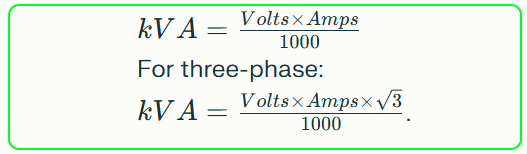
- For Single-Phase Systems:
Why This Matters
- Helps avoid overloading your wiring or generators.
- Saves money by choosing the right-size equipment.
- Ensures safe, uninterrupted power for every device.
Contact Creative Diesel Services Pvt Ltd to get a reliable diesel generator installed at your place!


Leave a Reply